


Can a scale inhibitor manufacturer match changing feedwater chemistry
Can a Scale Inhibitor Manufacturer Match Changing Feedwater Chemistry?
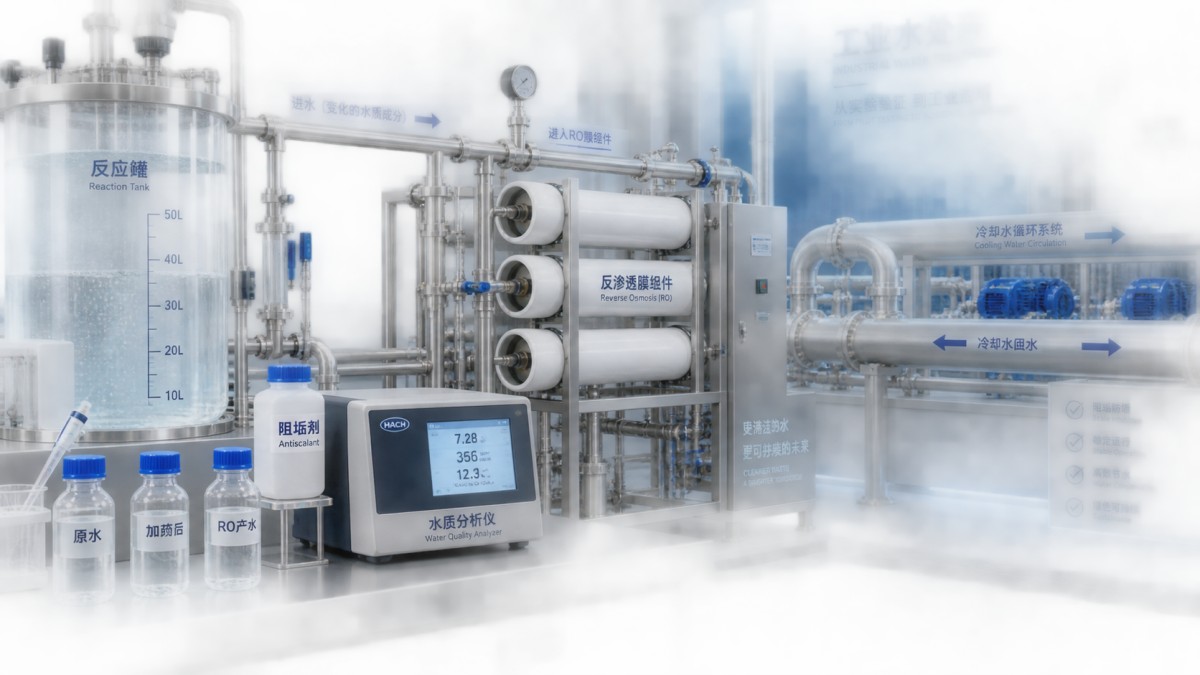
Yes, but only when the manufacturer can analyze changing water conditions, adjust formulation logic, and validate performance against the actual operating limits of the system.
For technical evaluators, the key question is not whether a product inhibits scale under standard laboratory conditions. It is whether treatment remains reliable after feedwater changes.
Source-water blending, seasonal variation, reuse-water ratios, chemical carryover, and process upsets can all alter the ions that determine scaling risk and treatment compatibility.
A qualified scale inhibitor manufacturer should therefore provide more than a catalog product. It should supply water analysis, formulation selection, testing support, and operating recommendations.
Why Changing Feedwater Chemistry Creates Treatment Risk
Scale control programs are usually designed around a baseline analysis. When hardness, alkalinity, sulfate, silica, pH, or temperature changes, the original dosage may no longer be appropriate.
Higher calcium and alkalinity commonly increase calcium carbonate scaling potential. Increased phosphate may promote calcium phosphate deposition, especially in high-cycle cooling water systems.
In oilfield reinjection applications, barium, strontium, sulfate, iron, suspended solids, and residual polymers may change together and create more complex deposition mechanisms.
Silica creates another challenge because its behavior is influenced by concentration, pH, temperature, metal ions, colloids, and interactions with other treatment chemicals.
Feedwater changes can also affect corrosion inhibitor compatibility, dispersant performance, oxidation stability, foam control, and the behavior of coagulants or biocides.
As a result, maintaining the same product and dosage after chemistry changes can lead to heat-transfer loss, membrane fouling, under-deposit corrosion, blocked pipelines, or unstable operation.
Technical evaluators should treat feedwater variation as a treatment-design issue rather than a simple purchasing issue. The most economical product may become costly when conditions shift.
What a Manufacturer Must Evaluate Before Recommending a Product
A technically capable supplier starts with representative water data. A single historical laboratory report rarely captures the chemistry range experienced during real plant operation.
Core parameters include calcium, magnesium, bicarbonate alkalinity, total dissolved solids, chloride, sulfate, silica, phosphate, iron, manganese, pH, conductivity, and suspended solids.
For cooling systems, evaluators should also provide concentration cycles, bulk-water temperature, heat-exchanger surface temperature, makeup source, blowdown practices, and microbiological treatment conditions.
For reverse osmosis pretreatment, the supplier needs recovery rate, antiscalant injection point, membrane type, reject chemistry, pH adjustment practices, and upstream filtration performance.
Oilfield reinjection projects require produced-water composition, injected-water composition, mixing ratios, pressure, temperature, compatibility results, and information about polymer or oil contamination.
It is equally important to understand how quickly the water changes. A seasonal shift can be managed differently from sudden wastewater reuse fluctuations or intermittent source switching.
The manufacturer should calculate likely saturation tendencies across expected operating ranges, then identify the ions and conditions most likely to exceed treatment tolerance.
How Customized Formulations Improve Control Under Variable Conditions
Customized scale control does not always mean inventing a completely new chemistry. Often, it means selecting the correct active combination, concentration, dosage range, and monitoring plan.
Phosphonate-based chelating agents can provide threshold inhibition and metal-ion control, while polycarboxylate polymers help disperse precipitated particles and prevent deposit agglomeration.
The correct balance depends on whether the dominant risk is calcium carbonate, calcium phosphate, barium sulfate, strontium sulfate, silica, iron deposition, or mixed mineral scale.
For example, Copolymer of Phosphono and Carboxylic Acid (POCA) can be considered where calcium carbonate, calcium phosphate, sulfate scale, and silica deposition require broad control.
This chemistry offers useful dispersion performance and can work synergistically with other organophosphonates and copolymers when a broader treatment program is required.
Its chlorine oxidation resistance can also matter in circulating cooling water systems using oxidizing biocides, where chemical degradation may otherwise weaken scale-control performance.
However, no product should be selected solely from a general description. Compatibility with local water chemistry, treatment additives, operating temperature, and discharge requirements must be confirmed.
What Testing Should a Scale Inhibitor Manufacturer Provide?
Technical evaluators should ask how recommendations are verified. A credible scale inhibitor manufacturer should be able to connect laboratory evidence with the conditions encountered onsite.
Static bottle tests can screen scale formation under controlled chemistry. They are useful for comparing products, but they cannot fully reproduce turbulence, heat flux, or residence time.
Dynamic simulation testing provides stronger evidence when high temperature, elevated concentration cycles, or complex precipitation behavior make static results insufficient for final selection.
Compatibility testing is especially valuable when feedwater is blended. Mixing two individually stable waters can trigger barium sulfate, calcium sulfate, iron precipitation, or polymer incompatibility.
The test plan should include the expected worst-case chemistry, not merely the annual average. This approach identifies dosage reserve before a plant experiences operational disruption.
Suppliers should report methods, water composition, dosage, temperature, pH, test duration, control samples, and clear performance criteria rather than only presenting favorable conclusions.
When possible, a monitored field trial should follow laboratory screening. Deposit indicators, heat-transfer trends, corrosion data, membrane differential pressure, and chemical consumption should be reviewed.
How to Evaluate Manufacturing and Supply Capability
Formulation expertise is only one part of the decision. A customized program becomes unreliable if active content varies, delivery is inconsistent, or technical support is unavailable during changes.
Ask whether the supplier operates controlled production lines, standardized laboratories, incoming-material controls, batch testing, retention samples, and documented quality specifications for each supplied grade.
For liquid scale inhibitors, technical buyers should confirm appearance, solid content, density, pH, storage stability, freeze-thaw behavior where relevant, and packaging suitability for site handling.
POCA products may be available in multiple solid-content grades, including 30%, 37.5-42.5%, and 50%, allowing selection based on logistics, dosing equipment, and active-material requirements.
Packaging options such as 25 kg drums, 250 kg drums, and 1250 kg IBC tanks should align with consumption volume, storage limitations, transfer methods, and site safety procedures.
Global projects also require export documentation, consistent labeling, regulatory information, lead-time visibility, and an established process for technical changes or customer-specific specifications.
A manufacturer with in-house research, production, and application support can usually respond more effectively when feedwater conditions change faster than standard procurement cycles allow.
Questions Technical Evaluators Should Ask Before Approval
Begin by asking which water-quality parameters define the proposed product’s operating window. A useful answer should identify both acceptable ranges and known performance limitations.
Request evidence for the dominant scaling mechanisms in your system. Generic claims about “excellent scale inhibition” are less useful than results tied to calcium, sulfate, phosphate, or silica risks.
Ask whether the supplier can revise the formula or dosage after source-water changes. This reveals whether customized support is a practical capability or only a sales statement.
Clarify how the recommended chemistry interacts with corrosion inhibitors, dispersants, biocides, defoamers, coagulants, membranes, and downstream wastewater treatment requirements.
Review the proposed monitoring plan. It should define which operating parameters trigger action, who interprets results, and how dosage or chemistry adjustments are approved.
Finally, evaluate total treatment risk rather than purchase price alone. Avoided cleaning, fewer shutdowns, protected equipment, lower energy loss, and stable production often determine the real value.
Conclusion
A scale inhibitor manufacturer can match changing feedwater chemistry when it combines accurate water analysis, appropriate chemistry selection, validation testing, responsive manufacturing, and ongoing technical support.
For technical evaluators, the strongest supplier is not simply the one offering a familiar product. It is the one that defines performance boundaries and manages changing conditions.
By evaluating water variability, testing quality, formulation compatibility, supply consistency, and field support together, industrial users can make scale-control decisions with greater confidence.

ONLINE CONSULTATION
If you have any questions, please contact us and we will contact you as soon as possible.