


When modified silicone defoamers suit high-shear processing
When Modified Silicone Defoamers Suit High-Shear Processing
High-shear processing can quickly destabilize conventional foam-control agents, making product selection a technical decision rather than a simple dosage exercise. In wastewater treatment, circulation systems, mineral processing, pulping, textile operations, and chemical manufacturing, pumps, mixers, ejectors, membrane units, and transfer lines may repeatedly introduce air while breaking down an initially effective defoamer dispersion.
Modified Silicone Defoamers are often considered when a water-based system needs rapid knockdown, persistent foam suppression, and reasonable compatibility with surfactants, polymers, salts, or treatment additives. They are not automatically the right answer for every foaming problem. Their value becomes clearer when foam is being continuously regenerated under mechanical stress and when interruption to flow, separation, or product quality carries a meaningful operating cost.
Why high shear changes the defoamer decision
A defoamer must do more than collapse visible surface foam. It must disperse into the process liquid, reach the air-liquid interface, disrupt the foam film, and remain effective after being exposed to turbulence. In a low-agitation tank, an oil-based antifoam may stay localized long enough to work. In a high-shear loop, however, it can be broken into droplets that are too fine, excessively emulsified, or carried away from the foam zone before it performs.
This is where silicone modification matters. Silicone chemistry generally provides very low surface tension, which supports fast foam-film rupture. The modifying groups, emulsifier package, carrier fluid, particle profile, and active silicone content then influence how the material disperses and how it interacts with the system. A well-matched modified silicone product can offer a practical balance: it spreads quickly enough to control foam, yet does not separate so aggressively that it causes downstream defects or loses performance after recirculation.
The main question is therefore not whether a silicone defoamer is “strong.” It is whether its dispersion behavior remains appropriate after the actual pump, mixer, pressure drop, temperature cycle, and chemical environment have acted on it.
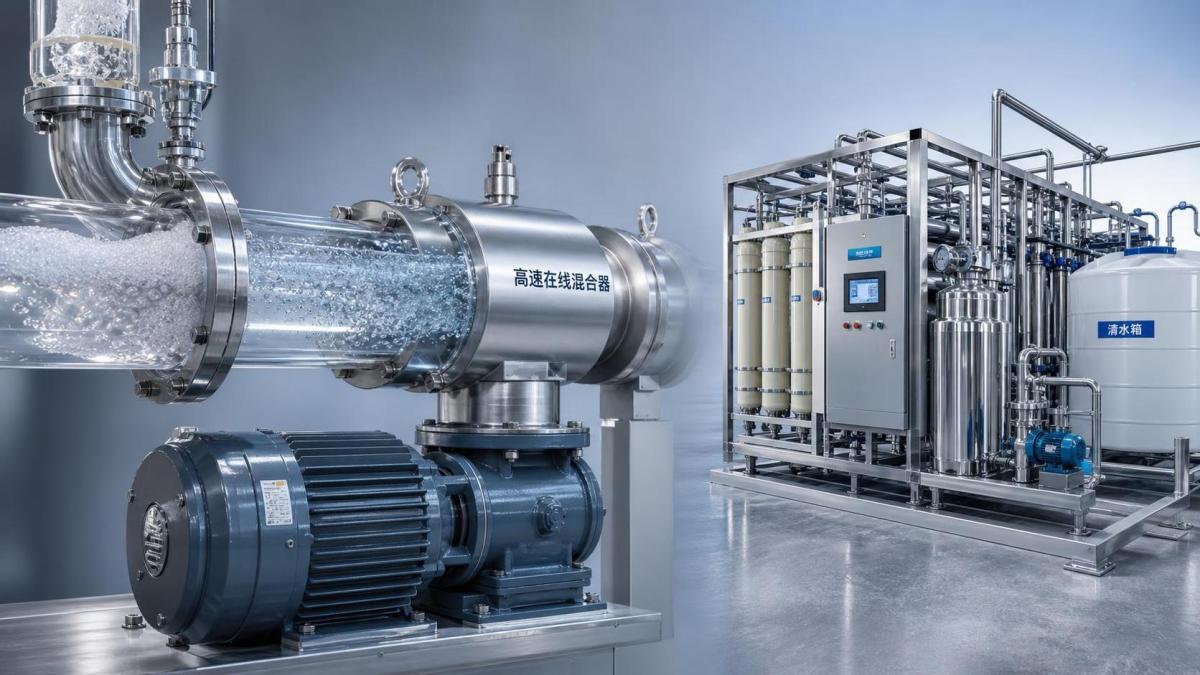
Operating conditions that usually justify modified silicone chemistry
Modified silicone defoamers are particularly worth evaluating where foam is created faster than a conventional agent can suppress it. Common examples include aerated industrial wastewater, high-speed paper stock handling, pigment or coating dispersions, gas scrubbing, drilling and oilfield water systems, and process streams with repeated pumping. RO pretreatment and membrane-related water handling may also require foam control, although compatibility and potential membrane impact should be checked carefully before use.
They tend to be most suitable when several conditions occur together:
- Foam reappears rapidly after manual or intermittent dosing.
- The process contains surfactants, dispersants, proteins, polymers, or fine solids that stabilize foam.
- Centrifugal pumps, inline mixers, recirculation loops, or spray systems create continuous mechanical stress.
- Overflow risk, poor level control, reduced pump efficiency, or gas entrainment affects plant stability.
- The product must work at relatively low addition levels without creating unacceptable surface residue or separation issues.
A frequent mistake is to assess a defoamer only in a beaker test. Such screening can identify obvious incompatibility, but it rarely reproduces the droplet size distribution, residence time, aeration rate, or recirculation intensity found in production. A candidate that gives immediate visual collapse in the laboratory may lose persistence once it passes repeatedly through a high-speed pump.
What technical evaluators should compare
The most useful comparison starts with the process, not the supplier’s product category. Technical teams should establish whether the problem is initial foam knockdown, long-term antifoam persistence, entrained air release, or all three. These are related but not identical performance requirements.
Temperature deserves separate attention. Higher temperature can lower liquid viscosity and make some foam films easier to break, but it can also change emulsion stability and accelerate loss of volatile carrier components. Likewise, highly alkaline or high-electrolyte systems can alter the behavior of emulsified defoamers. Testing should therefore use representative process water rather than clean laboratory water whenever possible.
Compatibility is more than a foam question
In industrial water treatment, foam control is often handled alongside scale inhibition, corrosion control, metal-ion management, biocide programs, and solids separation. The selected defoamer should be reviewed against the entire treatment formulation. For example, chelating and threshold-inhibition agents can be essential in a circulating cooling-water or boiler program, but their interaction with other additives, water hardness, and operating pH may affect foam behavior indirectly.
Where scale and corrosion management is also part of the operating challenge, materials such as Mono-sodium of 1-Hydroxy Ethylidene-1,1-Diphosphonic Acid (HEDP·Na) may be included in the broader treatment program. This HEDP·Na grade is specified with 19.0–21.0 active component calculated as HEDP, an Fe2+ content of no more than 20.0 mg/L, and a 1% aqueous-solution pH of 2.3–2.9. Its relevance in this context is not as a defoamer, but as a reminder that foam testing should use the real chemical matrix, including phosphonates, dispersants, salts, and other treatment agents.
The risk is often not dramatic incompatibility. It may be a gradual increase in foam tendency after a formulation adjustment, a change in feedwater composition, or the addition of a polymer that improves solids removal but stabilizes bubbles. A technically sound trial records these changes rather than treating foam as an isolated issue.
Where modified silicone defoamers may be the wrong fit
Silicone-based products should not be selected simply because foam is severe. Some downstream processes are highly sensitive to silicone contamination. Surface-coating defects, adhesion issues, filtration behavior, or membrane requirements may limit their use. In such cases, a non-silicone, mineral-oil-based, polyether-based, or system-specific alternative may warrant comparison.
They may also be a poor fit when the underlying source of foam is a process upset that should be corrected upstream: excessive aeration, incorrect pump operation, air leakage on the suction side, excessive surfactant carryover, unstable pH, or overloaded biological treatment. Dosing more defoamer can conceal the symptom while increasing treatment complexity.
A practical qualification path
A useful qualification sequence begins with a sample of the actual foaming liquid and a clear description of the process line. Bench screening can compare fast knockdown and visible residue. The next stage should introduce agitation or recirculation that approximates actual shear. A controlled site trial can then confirm the required dose range, injection point, persistence between doses, and downstream effects.
Prio New Materials approaches water-treatment additive selection through this broader process view. Its work spans standardized bulk supply, customized formula development, laboratory testing, and water-condition technical support for applications including industrial wastewater, cooling water, oilfield reinjection, desalination, power-plant desulfurization, and mine wastewater. For a defoamer evaluation, this means the discussion can include the water chemistry and operating conditions that determine whether an apparently effective product will remain effective in service.
Modified Silicone Defoamers are most compelling when foam is continuously recreated under shear and the formulation can maintain its balance of spreading, dispersion, and compatibility. Before finalizing a grade, confirm the process temperature, pH, conductivity, active additives, pump configuration, foam generation point, and downstream cleanliness requirements. Those details usually determine whether rapid foam collapse becomes reliable operating control rather than a short-lived laboratory result.

ONLINE CONSULTATION
If you have any questions, please contact us and we will contact you as soon as possible.