


What makes geothermal water scale inhibitor costs rise on remote sites
The cost of a geothermal water scale inhibitor on a remote site is rarely determined by the drum price alone. A low-priced product can become the expensive option once transport delays, unsuitable packaging, changing brine chemistry, overdosing, and emergency deliveries are included. For procurement teams, the useful comparison is total treatment cost per operating period, not simply cost per kilogram.
Remote geothermal operations are particularly exposed because the water source is difficult to standardize. Temperature, pressure changes, dissolved gases, calcium, silica, iron, barium, strontium, and suspended solids can all alter deposition behavior between wells, separators, reinjection lines, and heat-exchange equipment. An inhibitor that performs acceptably in one part of the system may require a different dosage or a complementary treatment approach elsewhere.
Freight and packaging often change the real purchase price
Transport to a remote geothermal field can involve long road legs, port handling, restricted delivery windows, or special storage arrangements at site. These costs increase sharply when purchases are made as urgent, small-volume shipments instead of planned replenishment.
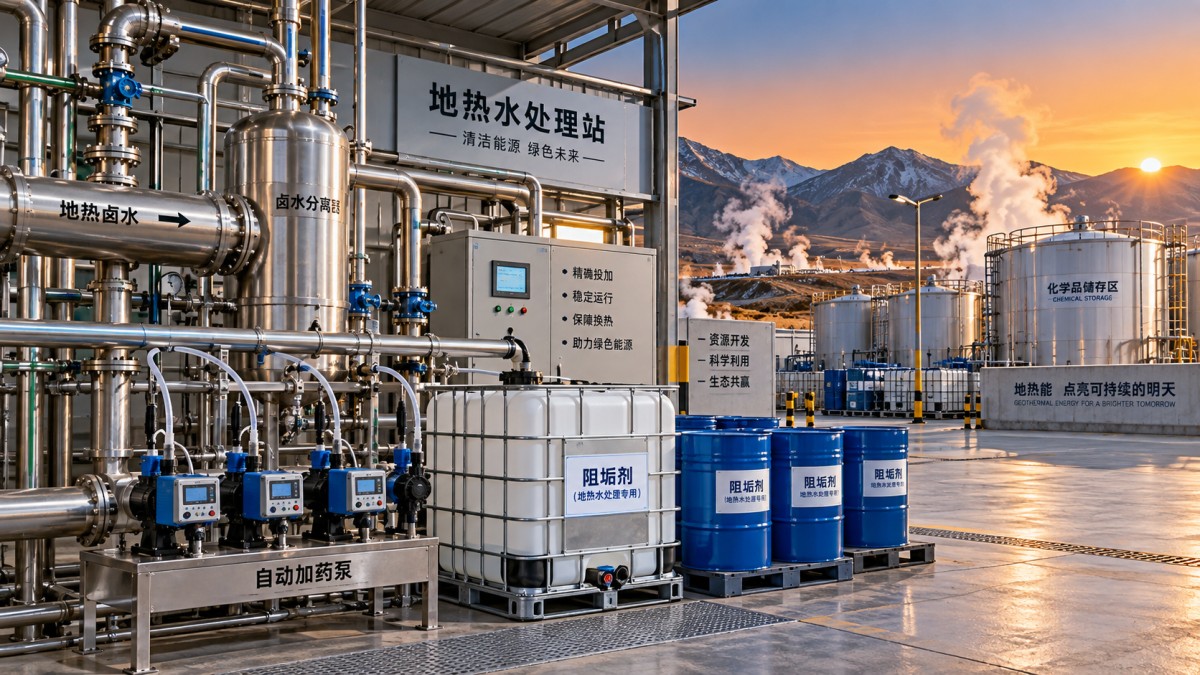
Packaging has a direct effect on this calculation. Smaller drums are easier to move when site access is constrained, but create more handling, unloading, disposal, and dosing-labor costs. IBC tanks can reduce unit handling for sites with suitable equipment and protected storage, but they are not automatically the better choice when seasonal consumption is uncertain or the road route limits payloads.
Buyers should request freight-inclusive pricing for the intended delivery point, then compare it with the cost of maintaining an agreed buffer stock. The right buffer is not the largest possible inventory. It is enough material to cover the realistic supplier lead time plus a disruption allowance, without leaving product exposed for so long that storage conditions or site changes create waste.
Water chemistry uncertainty creates hidden chemical spend
Scale inhibitor consumption rises when treatment is selected from a generic water description rather than current operating conditions. Geothermal fluids are not static. A change in flow rate, flashing conditions, reinjection ratio, temperature profile, or produced-water blend can change the scaling risk and the treatment point that matters most.
The usual procurement error is to buy against a historic dosage sheet and assume that the same product and concentration will remain suitable. Operations may then increase the feed rate when deposits appear, even though the actual problem could be poor injection location, inadequate mixing, corrosion products, or a scale type that needs a different treatment program. That response increases chemical use without reliably protecting equipment.
Before contracting supply, align the product selection with recent water analysis and the process location where deposition occurs. The practical questions are:
- Which deposits are being controlled: carbonate, silica-related deposits, metal-containing deposits, or a mixed scale?
- Where does pressure or temperature shift enough to trigger precipitation?
- Is the product injected upstream early enough to disperse through the fluid?
- Will iron, corrosion debris, oil, solids, or other treatment chemicals interfere with performance?
- Does the dosing system deliver consistently at the required injection point?
These questions determine consumption more reliably than a supplier's quoted unit price. A compatible formulation at a controlled dose is normally less costly than a cheap product that must be continually adjusted in the field.
Remote storage can turn usable stock into a site problem
Site storage is frequently treated as a logistics detail, but it affects product usability and dosing reliability. Cold conditions can make some liquid formulations harder to handle. Heat exposure, poor container closure, contamination during transfer, and prolonged storage can also complicate pumping or concentration control. When chemical feed becomes inconsistent, operators may compensate by raising dosage, which hides the storage issue while increasing spend.
Procurement specifications should therefore cover more than active content. Include the preferred physical form, container size, storage temperature range required by the product documentation, expected shelf-life management, transfer method, and compatibility with site pumps, seals, and tanks. A product that arrives in the correct chemistry but cannot be transferred cleanly into the dosing system is not a complete supply solution.
For sites exposed to severe cold, a transportable sodium salt form may be worth evaluating where it fits the water-treatment program. Tetra Sodium Salt of 1-Hydroxy Ethylidene-1,1-Diphosphonic Acid (HEDP·Na4) is used in circulating-water and related industrial treatment applications and is available in liquid and solid forms. Its value in a geothermal program depends on the actual scale mechanism, system chemistry, injection conditions, and compatibility with the broader formulation; it should not be selected solely because it is convenient to ship or store.
Emergency replenishment is usually a planning cost
Expedited orders are expensive because they combine premium freight with operational pressure. More importantly, an interruption in inhibitor feed can lead to deposits that require cleaning, reduced heat-transfer efficiency, restricted flow, or unplanned intervention. The chemical invoice may be small compared with the consequence of losing stable treatment.
A stronger purchasing arrangement separates routine volume from contingency supply. Routine orders should follow forecast consumption and lead time. Contingency supply should define available packaging, release procedures, shipment options, and a technically acceptable substitute if the primary grade is temporarily unavailable. Substitution should be controlled: similar chemistry does not guarantee equal performance in geothermal brine.
Technical support affects cost when conditions move
Remote facilities may have limited laboratory capability and fewer opportunities for immediate on-site troubleshooting. Under those conditions, the ability to review water data, interpret deposit samples, and adjust the treatment recommendation has economic value. It reduces the tendency to solve every problem by feeding more product.
When comparing suppliers, ask what information they need to support a recommendation and what they can provide after delivery. Useful support includes review of water conditions, product compatibility guidance, dosage adjustment logic, and help distinguishing scaling from corrosion, fouling, or solids deposition. Prio New Materials supplies water-treatment raw materials alongside customized formulation development and water-condition technical support, which can be relevant where geothermal treatment requires a program rather than a single commodity purchase.
Use a landed-cost comparison, not a drum-price comparison
The procurement decision should end with a defined operating basis: current water data, expected monthly demand range, acceptable packaging, minimum on-site inventory, delivery lead time, and a procedure for changes in scale behavior. This turns geothermal water treatment from a sequence of urgent chemical purchases into a controlled supply and operating plan.

ONLINE CONSULTATION
If you have any questions, please contact us and we will contact you as soon as possible.