


What is the safe storage condition for N-(2-hydroxyethyl) ethylenediamine-1,1,2-tri?
“What is the safe storage condition for N-(2-hydroxyethyl) ethylenediamine-1,1,2-tri?” is a practical question for quality-control teams and EHS managers, especially when the material is received as a water-treatment raw material, held in bulk inventory, or transferred into day tanks. Safe storage is not only about keeping containers out of the way. It affects chemical stability, traceability, worker exposure, spill readiness, and the consistency of the finished water-treatment formulation.
Because the chemical name may appear in different forms on technical documents—often with the full phosphonic-acid suffix or a salt designation—the supplier’s current Safety Data Sheet (SDS), Technical Data Sheet (TDS), and product label must be treated as the controlling source. Storage conditions can differ between an acid form, a partially neutralized solution, and a fully neutralized salt solution. The guidance below provides a robust storage-management framework for aminophosphonate-type water-treatment chemicals while helping facilities identify when a product-specific confirmation is needed.
Start with the product identity, not the abbreviated name
Before setting a warehouse condition, verify the exact material against the purchase specification. Record the full chemical name, CAS number, concentration, physical form, pH, packing type, batch number, and applicable SDS revision date. A shortened name such as “N-(2-hydroxyethyl) ethylenediamine-1,1,2-tri” can be insufficient for determining whether the material is an acidic phosphonate, an alkaline sodium salt, or a formulated blend.
This distinction matters. A concentrated acidic liquid may require different corrosion-resistant handling arrangements from an alkaline salt solution. Likewise, the freezing behavior, crystallization risk, and recommended storage temperature may depend on active content and salt form rather than the base chemical name alone.
Core safe storage conditions
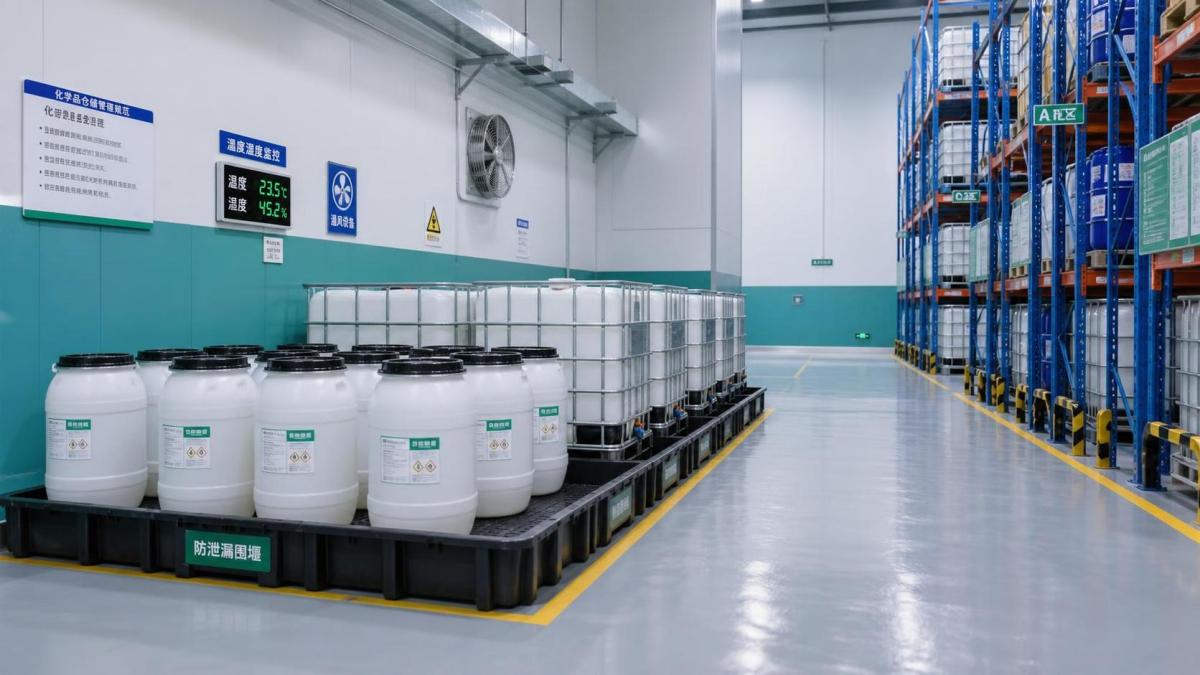
For most liquid aminophosphonate water-treatment chemicals, a safe storage arrangement should be cool, dry, clean, and well ventilated. The product should remain in its original, tightly closed packaging unless a compatible bulk-storage system has been approved. Avoid direct sunlight, weather exposure, prolonged high heat, and unnecessary temperature cycling.
- Temperature control: Store within the temperature range specified by the supplier. Do not assume that all phosphonate products tolerate freezing or excessive heat equally. Low temperatures may cause crystallization, phase separation, or an increase in viscosity; high temperatures can accelerate degradation, alter appearance, and increase internal pressure in closed containers.
- Protection from moisture and contamination: Keep closures secure when the product is not being transferred. Water ingress, dust, process residues, and cross-contamination from shared transfer equipment can change concentration and reduce batch-to-batch reliability.
- Ventilation: Maintain adequate general warehouse ventilation, particularly near filling, sampling, and drum-opening locations. Where local regulations or risk assessments require it, provide local exhaust for transfer operations.
- Secondary containment: Place drums, IBCs, or tanks in bunded areas sized according to site rules and local environmental requirements. The containment area should protect drains and prevent an accidental release from reaching soil or surface water.
- Container compatibility: Use only packaging and storage tanks confirmed by the supplier as compatible. High-density polyethylene containers are common for many aqueous water-treatment chemicals, but compatibility must not be assumed for every concentration or formulation.
Segregation: what should not be stored nearby?
Segregation should be based on the SDS incompatibility section and the actual formulation. In general, keep this class of chemical separate from strong oxidizing agents and materials that could create a hazardous reaction or contaminate the product. Do not co-store chemicals simply because they are both used in water treatment; operational convenience is not a compatibility assessment.
For warehouse zoning, it is sensible to separate oxidizers, concentrated acids, concentrated alkalis, reactive chlorinating products, and unknown returned materials from phosphonate-based stock. If a facility uses shared spill pallets or bulk transfer lines, establish a documented cleaning and line-clearance procedure. One overlooked source of quality loss is residual chemical from the previous transfer rather than a visible storage failure.
Where the product is supplied as a metal-sensitive chelant or phosphonate solution, avoid uncontrolled contact with unsuitable metal surfaces. Select pumps, valves, gaskets, and tank fittings according to the supplier’s chemical-compatibility guidance. The QC team should include these materials in equipment change-control reviews.
A practical receiving and inspection routine
The safest storage program begins at goods receipt. A drum that arrives swollen, leaking, unlabeled, or visibly contaminated should not be moved directly into normal inventory. Quarantine it, document the condition, and contact the supplier before use.
Routine checks do not need to become paperwork for its own sake. A concise weekly inspection of high-turnover stock and a more detailed monthly warehouse audit will often reveal issues early: a cap left loose after sampling, a drip beneath an IBC valve, temperature exposure near a loading door, or incompatible materials placed together during a busy shift.
Temperature excursions and freezing: avoid guesswork
If N-(2-hydroxyethyl) ethylenediamine-1,1,2-tri-containing material has been exposed to freezing conditions, do not immediately heat it aggressively or return it to production. Move the container to a controlled area and follow the supplier’s recovery instructions. Some solutions can be restored by gradual warming and controlled mixing; others may require laboratory evaluation before release.
The QC release decision should consider appearance, active content where relevant, density, pH, and any specification tests required for the material. A clear-looking liquid is not automatically fit for use after an excursion. Conversely, a temporary physical change does not always mean the batch has failed. The point is to use documented evidence rather than assumptions.
Handling controls around the storage area
Storage safety continues during sampling and transfer. Employees should use the personal protective equipment specified by the SDS, commonly including suitable gloves, protective eyewear or face protection, and protective clothing appropriate to splash risk. Ensure that eyewash and emergency shower facilities are accessible where required by the site risk assessment.
Use dedicated or properly cleaned transfer hoses, pumps, sample bottles, and funnels. Clearly identify every connection point, especially when bulk tanks contain similar-looking liquids. A mistaken transfer can be more disruptive than a minor spill because it may compromise an entire storage tank and downstream formulation batch.
Spill-response supplies should be located close enough to be useful but stored so they remain dry and accessible. The emergency procedure should specify isolation of drains, containment of the release, use of compatible absorbents, waste labeling, and notification routes. Staff should never rely on a generic spill response if the SDS gives product-specific instructions.
How this applies to alkaline phosphonate scale inhibitors
Storage planning becomes particularly important when alkaline phosphonate products are used in circulating cooling water, boiler treatment, oilfield reinjection water, or cleaning-water formulations. For example, Penta Sodium Salt of Amino Trimethylene Phosphonic Acid (ATMP·Na5) is supplied as a colorless to light-yellow transparent liquid with a 1% solution pH of 10.0–11.0. Its storage and handling plan should therefore account for its alkaline character, appropriate PPE, container compatibility, clean transfer practice, and protection from contamination.
Such products are commonly formulated with other organophosphonates, polycarboxylic acids, or polycarboxylates to control scale and support corrosion inhibition. That makes accurate inventory identification essential: a storage mix-up may not create an obvious immediate hazard, yet it can alter formulation balance and affect field performance in cooling-water or boiler-water systems.
When to escalate to the supplier or EHS team
Seek formal guidance before releasing or using inventory if the product label is incomplete, the chemical identity does not match the SDS, a container has leaked, the stock has exceeded its stated shelf life, or the material has experienced a significant temperature excursion. Escalation is also appropriate when transferring from packaged goods to a new bulk tank, changing packaging materials, or introducing a new cleaning chemical into a shared unloading area.
In short, the safe storage condition for N-(2-hydroxyethyl) ethylenediamine-1,1,2-tri is not a single universal temperature or one-line warehouse instruction. The dependable approach is to confirm the exact product form, follow the supplier’s SDS, maintain a cool and protected storage environment, segregate incompatible chemicals, control contamination, and document inspections. For QC and safety managers, those small controls are what keep a routine chemical inventory from becoming an avoidable quality or safety event.

ONLINE CONSULTATION
If you have any questions, please contact us and we will contact you as soon as possible.