


What storage conditions preserve BHMTPMPA CAS 34690-00-1 stability?
Proper storage is essential to preserve the performance, handling safety and formulation reliability of BHMTPMPA CAS 34690-00-1 in industrial water treatment operations. For quality-control personnel and safety managers, storage is not simply a warehouse issue: it directly affects active-content consistency, dosing accuracy, compatibility with other treatment chemicals and the traceability of material released to production.
BHMTPMPA is generally managed as an organophosphorus chelating and scale-control raw material. In practice, its stability depends less on one single “ideal” number than on a controlled combination of temperature, package integrity, contamination prevention and stock rotation. The product-specific Safety Data Sheet (SDS), Technical Data Sheet (TDS) and certificate of analysis should always take priority, particularly where the supplied grade, concentration, salt form or packaging differs from standard procurement specifications.
Start with identity confirmation before setting warehouse controls
A common source of avoidable risk is treating all phosphonate products as interchangeable. Similar names may refer to different acids, sodium salts, aqueous solutions or concentration grades, each with different freezing behavior, pH, density and compatibility characteristics. Before a shipment of BHMTPMPA CAS 34690-00-1 is accepted into storage, QC should verify the supplier name, CAS number, batch number, net weight, production date, retest or expiry date, concentration and package type against the purchase specification.
This check matters especially when a site stores several acidic water-treatment chemicals side by side. A mislabeled drum may not show obvious visual changes, yet an incorrect material can create a major formulation deviation once it reaches a blending tank. Identity control at receiving is therefore the first stability control.
- Confirm that the outer label and shipping documents identify the correct chemical and grade.
- Inspect seals, caps, drum closures, valve outlets and IBC fittings for leakage or tampering.
- Record the batch number in the warehouse system before material is released for use.
- Quarantine damaged, swollen, discolored or undocumented packages pending QC assessment.
Keep BHMTPMPA CAS 34690-00-1 in a cool, dry and shaded location
The practical storage objective is to avoid temperature extremes. Store BHMTPMPA in a cool, well-ventilated warehouse away from direct sunlight, roof heat and heating equipment. Long exposure to elevated temperatures can accelerate physical changes in aqueous products, increase internal package pressure where contamination or side reactions are present, and make routine handling less predictable. Even where the active phosphonate is chemically robust, unnecessary heat can shorten the margin of stability for the total commercial formulation.
At the other extreme, freezing or repeated freeze-thaw cycling should be avoided unless the supplier specifically confirms that the grade tolerates it. Low temperature may cause crystallization, phase separation, viscosity changes or localized concentration differences in liquid materials. A drum that appears normal after thawing should not automatically be returned to service; it should be mixed only according to supplier guidance and evaluated against the approved quality criteria before release.
For most warehouse programs, a stable indoor ambient environment is preferable to uncontrolled exposure. The important point is consistency. A product stored in a shaded, monitored warehouse generally faces less risk than the same product moved repeatedly between a hot loading yard and a cold outdoor container.
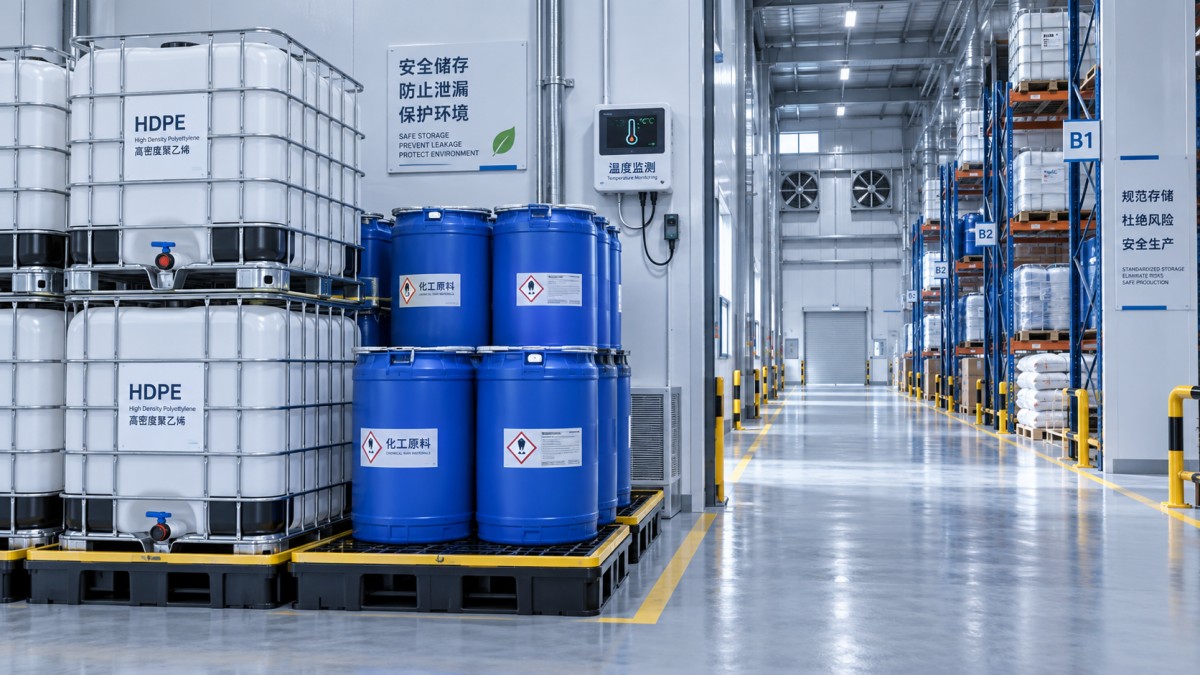
Temperature monitoring should be meaningful, not merely documented
A wall thermometer alone may not reflect conditions inside IBCs stacked near a sun-facing wall or beside a loading door. Place temperature sensors in representative high-risk locations, review seasonal trends, and define an escalation process for excursions. Safety teams should consider not only daily peak temperature but also duration. A short, controlled rise during unloading is different from several weeks of heat accumulation in an unventilated warehouse.
When excursions occur, retain the batch in a clearly marked hold area. QC can then compare appearance, pH, density, active content and other relevant parameters with the product specification. Release should be evidence-based rather than based on appearance alone.
Protect the package from moisture, air and contamination
For liquid BHMTPMPA, the original closed container is normally the best storage environment. Keep drum bungs, IBC caps and transfer connections tightly closed when not in use. This minimizes entry of dust, rainwater, process water and foreign chemicals. Dilution by accidental water ingress can shift active concentration and may make dosing calculations unreliable. Contamination with metal-bearing residues, alkaline cleaners or reactive oxidizing materials can also affect product performance or create unwanted heat and gas-generation concerns depending on the contaminant.
If a solid grade is supplied, moisture control becomes even more important. Hygroscopic phosphonate materials may absorb humidity, cake during storage and become difficult to weigh or dissolve consistently. Store bags or fiber drums off the floor on clean pallets, keep them away from wet walls, and reseal partially used packages promptly. Do not place opened solids near steam lines, wash-down zones or doors exposed to rain-laden air.
Use only dedicated or thoroughly verified-clean transfer equipment. Hoses, pumps, dip tubes and sample thieves that previously handled alkali, biocides, coagulants, metal salts or unknown process residues should not be reused without documented cleaning and compatibility review. In water-treatment plants, cross-contamination often begins with a “temporary” hose that becomes permanent by habit.
Choose compatible packaging and secondary containment
Acidic organophosphorus products are commonly supplied in chemically resistant plastic packaging such as HDPE drums or IBCs, but the actual packaging recommendation must follow the supplier’s documentation. Avoid unapproved metallic containers, fittings or transfer systems. Certain metals may corrode in acidic conditions, contaminate the product with ions, or reduce the service life of storage hardware.
Storage areas should have chemically compatible secondary containment sized in accordance with local regulations and site procedures. The containment surface should be intact, easy to inspect and protected from rainwater accumulation. A bund filled with rainwater is not an effective spill-control measure; it may turn a minor leak into a larger waste-handling problem.
For bulk storage, specify compatible tank construction, seals, pumps and sampling points before installation. The best tank material is not determined only by the main active ingredient. Concentration, temperature, trace acidity and the full formulation composition all matter. A supplier compatibility review is prudent before changing from packaged supply to bulk delivery.
Separate incompatible materials and control access
BHMTPMPA should be segregated from incompatible chemicals identified in the SDS, with particular attention to strong alkalis, strong oxidizers and materials that could contaminate an acidic product stream. Separation is not solely about preventing a dramatic incident. Small leaks, shared spill pallets and incorrectly connected transfer lines can alter the quality of multiple batches before anyone notices.
Clearly mark storage bays, transfer points and emergency isolation routes. Maintain accessible eyewash and safety-shower equipment where required by the site risk assessment. Personnel handling containers should use the personal protective equipment specified by the SDS, commonly including chemical-resistant gloves, suitable eye and face protection, and protective clothing appropriate to splash potential.
Access should be limited to trained personnel. This is particularly relevant where warehouse staff rotate between water-treatment chemicals with similar-looking white IBCs or blue drums. Label legibility, barcode scanning and a two-person verification step for bulk transfers can prevent a costly line-up error.
A practical receiving-to-release inspection routine
A stability program becomes dependable when checks are built into normal work rather than reserved for incidents. Upon receipt, document packaging condition and retain the supplier’s batch certificate. During storage, inspect inventory at a frequency matched to warehouse conditions and turnover rate. High-temperature seasons, long-term stock and partially used containers deserve closer attention.
Warning signs that justify a QC review include unexpected color change, haze, sediment, crystallization, unusual odor, package deformation, leaking closures, unexplained weight loss or a substantial difference in density and pH from the approved range. These observations do not automatically prove degradation, but they are strong reasons to stop routine use until the material is assessed.
Do not assume “stable in water” means stable under every storage condition
Phosphonate-based scale inhibitors are valued because they can maintain useful performance in demanding water-treatment environments. However, product stability in a controlled application is different from storage stability in an opened container, a contaminated transfer line or a warehouse exposed to repeated temperature swings. The phrase “chemically stable” should never replace a defined storage and inspection procedure.
For comparison, other phosphonate raw materials used in industrial cooling-water, oilfield reinjection, textile processing and metal surface treatment may have different physical forms and storage concerns. For example, Amino Trimethylene Phosphonic Acid (ATMP) may be supplied as a liquid or as a hygroscopic granular solid. That distinction illustrates why product identity, concentration and form must be checked before applying any storage rule across a chemical inventory.
Stock rotation, sampling and transport discipline
Apply first-expired, first-out (FEFO) inventory management wherever expiry or retest dates are assigned. FIFO alone can be inadequate if products arrive with different remaining shelf-life periods. Keep partial containers clearly marked with opening date, remaining quantity and responsible department. Do not return unused material from a process area to the original container unless a documented procedure permits it; this is a frequent route for contamination.
Sampling should be performed with clean, compatible tools and should disturb the package as little as possible. Repeated opening of an IBC simply to “check” stock can introduce more risk than it removes. When representative analysis is required, use a controlled sampling point, promptly reseal the container and record the sample chain of custody.
During transportation, protect containers from direct weather exposure, secure them against movement and inspect them again after arrival. A shipment may leave the supplier in excellent condition but experience vibration, heat buildup or cap damage en route. Receiving inspection closes that gap.
Storage conditions that support dependable use
In concise terms, preserve BHMTPMPA CAS 34690-00-1 by keeping it in its approved, tightly closed packaging; storing it indoors in a cool, dry, ventilated and shaded area; avoiding freezing, prolonged heat and direct sunlight; preventing contact with incompatible chemicals and contaminated equipment; and releasing material through documented QC checks when conditions have been abnormal.
These measures help quality teams protect active-content consistency and help safety managers maintain a controlled chemical environment. In industrial water treatment, where small changes in raw-material condition can affect scale control, corrosion management and blend performance, careful storage is not an administrative detail. It is part of the treatment program’s reliability.

ONLINE CONSULTATION
If you have any questions, please contact us and we will contact you as soon as possible.